Dog or Drone? Choosing a Recovery Method
A leashed tracking dog and a recovery drone both recover wounded deer, but they search differently. Match the tool to your ground, then call someone who knows how to use it.
Two very different searches
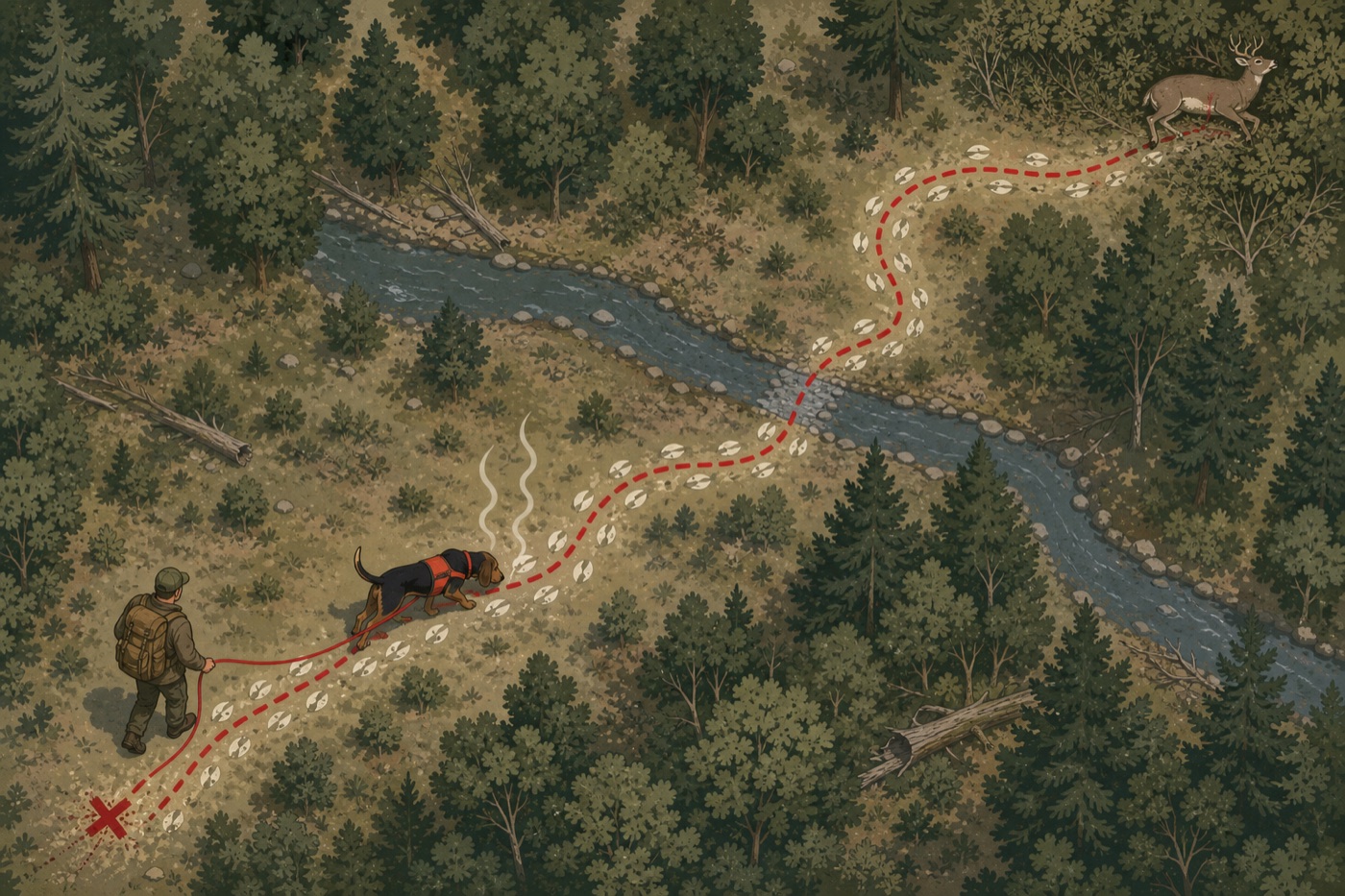
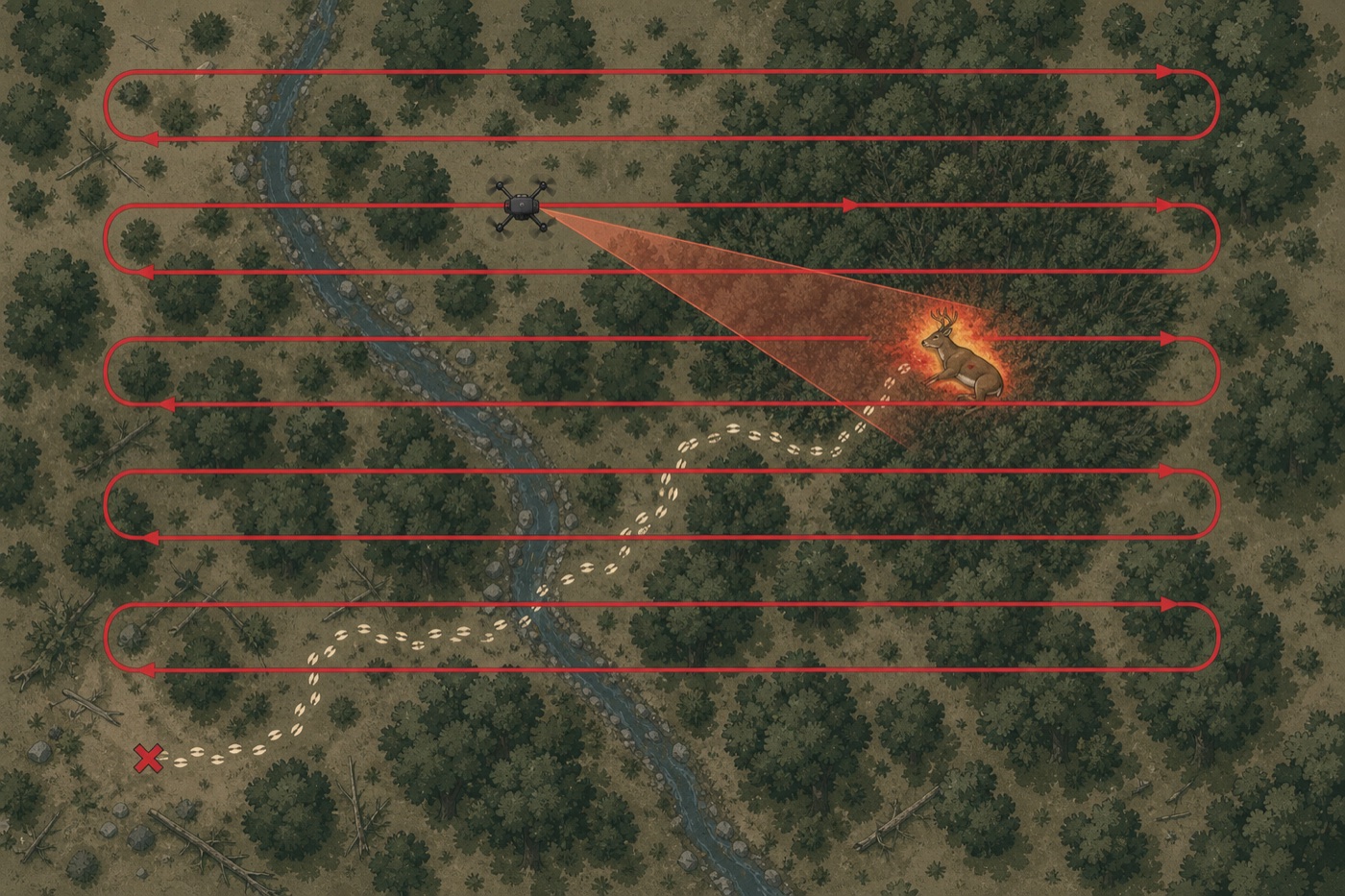
A dog works the deer's actual escape route, nose to the ground, from the hit site to the animal. A drone works the area from above, flying a systematic grid and scanning the ground with cameras. That single difference drives almost everything else below.
At a glance
| Situation | On-lead tracking dog | Recovery drone |
|---|---|---|
| Thick cover & foliage | Works fine; it uses scent, not sight | Seasonal; blind leaf-on, much better after November leaf-drop |
| Open ground & big fields | Works, but slow to cover a large area | Excellent; clears fields and clear-cuts in minutes |
| Long trails & direction changes | Excellent; this is its core strength | Limited; a grid assumes the deer stayed close |
| Confirms the deer is yours | Yes; it locks onto one scent | Usually clear from location and hit evidence, but less certain |
| Steep, unsafe, or hard-to-reach terrain | Can go there, but slower and riskier for the team | Searches bluffs, cliffs, and thin ice safely from the air |
| Wind, rain & no-fly zones | Works in most weather | Grounded by wind or rain; no-fly zones apply |
| When the deer is still alive | Reads condition up close; better chance at a follow-up shot | Pinpoints and checks it from above without pushing it |
| Crossing property lines | Stops without permission | Can overfly, but recovery still needs permission |
- Thick woods, especially before November leaf-drop: call a dog.
- Large open areas, dense suburbia, or unsafe ground after the leaves are down: a drone is often faster.
- Not sure, or the trail may twist through cover: dog, or a team that runs both.
Maryland rules (same for both)
Both may only be used to recover a dead, wounded, or injured animal, never to find, chase, drive, or scout a healthy deer. Tracking a wounded deer is still hunting, so normal hunting laws apply.
- Notify NRP before and after. Call before the search starts and again when it ends, whether you are running a dog or a drone. Deer go to the deer hotline, 1-800-628-9944. Bear go to the 24 hour emergency line, 410-260-8888.
- Dog on lead; landowner permission to recover. A tracking dog must stay leashed. Spotting a deer across a property line still requires permission before anyone steps on that land.
- Finish with a legal weapon for the season. A still-living deer may only be dispatched with a weapon legal for the season under way, and it counts on the original hunter's tag.
- Darkness is not the end of it. A deer wounded in legal light may be pursued and killed after legal shooting hours, within 24 hours of the end of shooting hours that day, and you may put a light on the animal. Call NRP before you carry on after hours and again when the search ends. Motorized vehicles may not be used to pursue a wounded deer at any hour. This applies to deer, not to bear.
- No scouting, then hunting. Do not use a drone to scout or surveil game and then hunt that property within 24 hours of the last flight.
Choose the tracker, not just the tool
Owning a dog or a drone does not make someone a good tracker. Look for an experienced operator who hunts, reads hit-site sign, and understands wounded-deer behavior.
- Certified dogs. Prefer handlers whose dogs are tested by United Blood Trackers (UBT) or the American Blood Tracking Association (ABTA) on standardized mock tracks.
- Certified drone operators. An FAA Part 107 license covers safe flying, not recovery skill. Prefer operators with ABTA blood-tracking drone certification, which tests reading sign, not just piloting.
Why not both?
The two methods cover each other's weak spots. A drone can clear open ground fast; a dog can finish a cold or foliage-covered trail the camera can't solve. Some operators in the network offer both a dog and a drone, so you get the right tool for the ground you're on.
Find a tracker or drone operator
Browse the Maryland Blood Tracking Network registry to find a nearby dog handler, drone operator, or a team that runs both.